Cami Studio Website
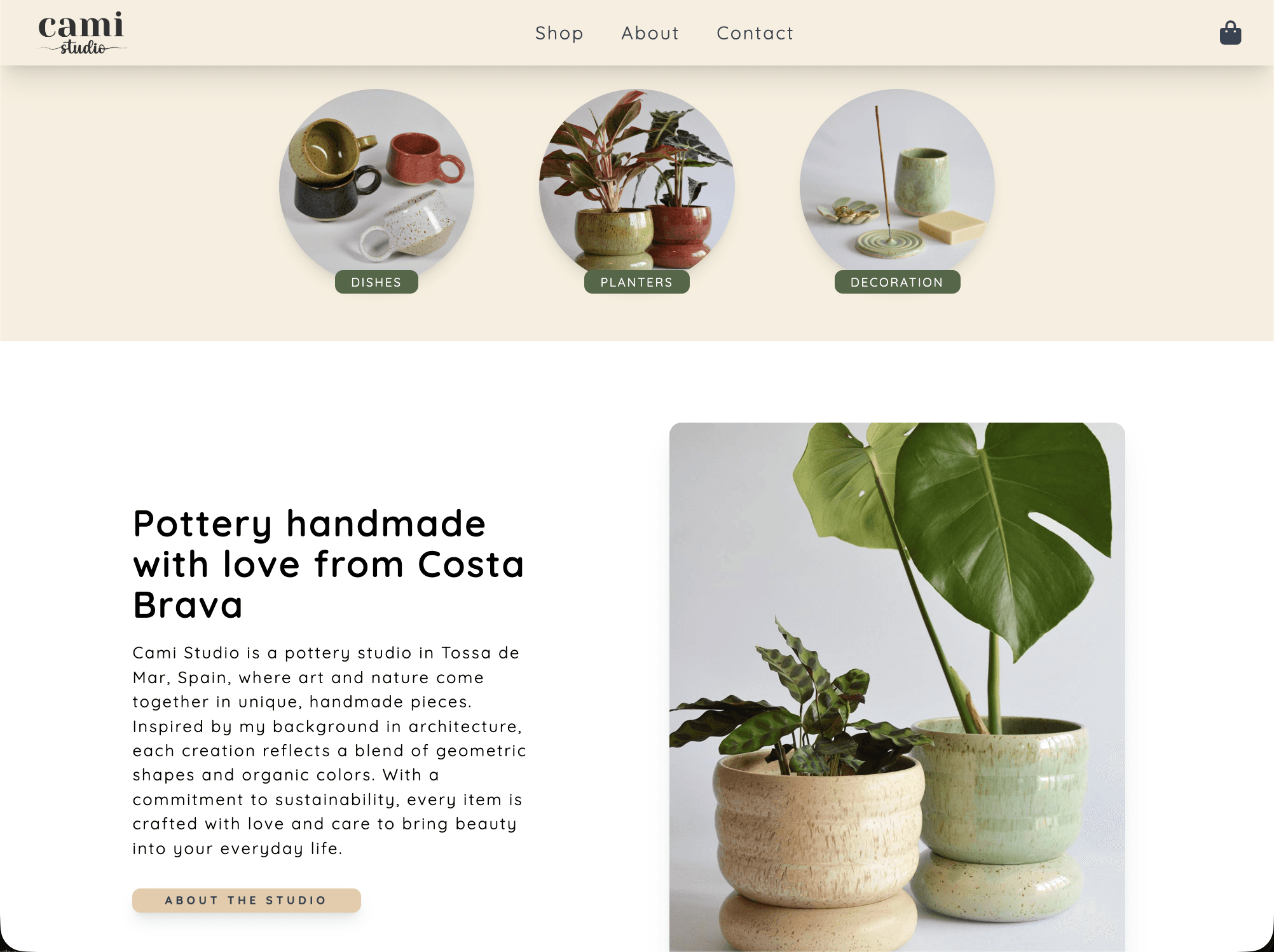
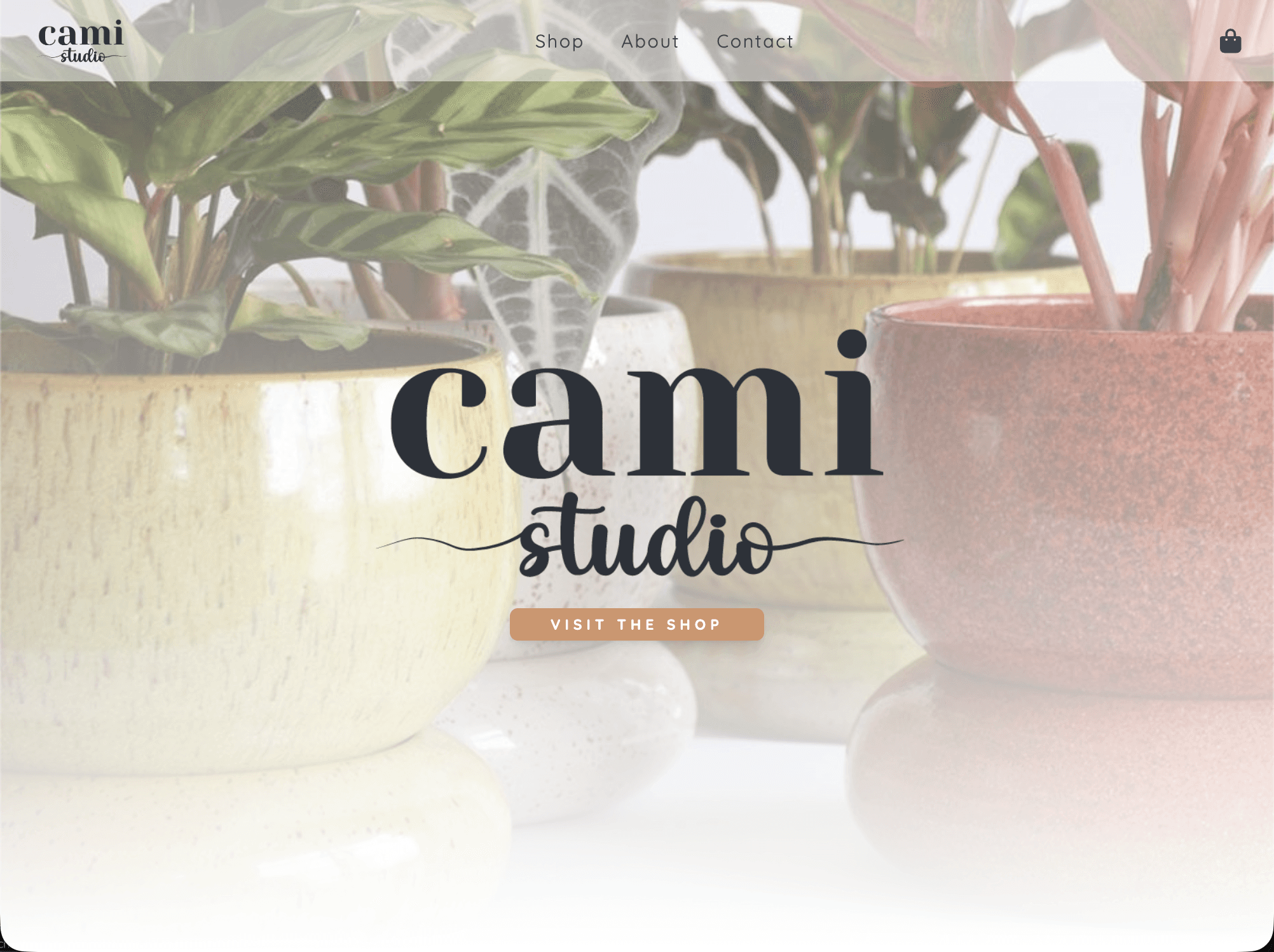
Cami Studio Design is a small scale handmade ceramic studio that create decorative pieces and needed an e-commerce website to communicate the brand vision and sell the pieces online.
Goals & Objectives
Cami Studio Website
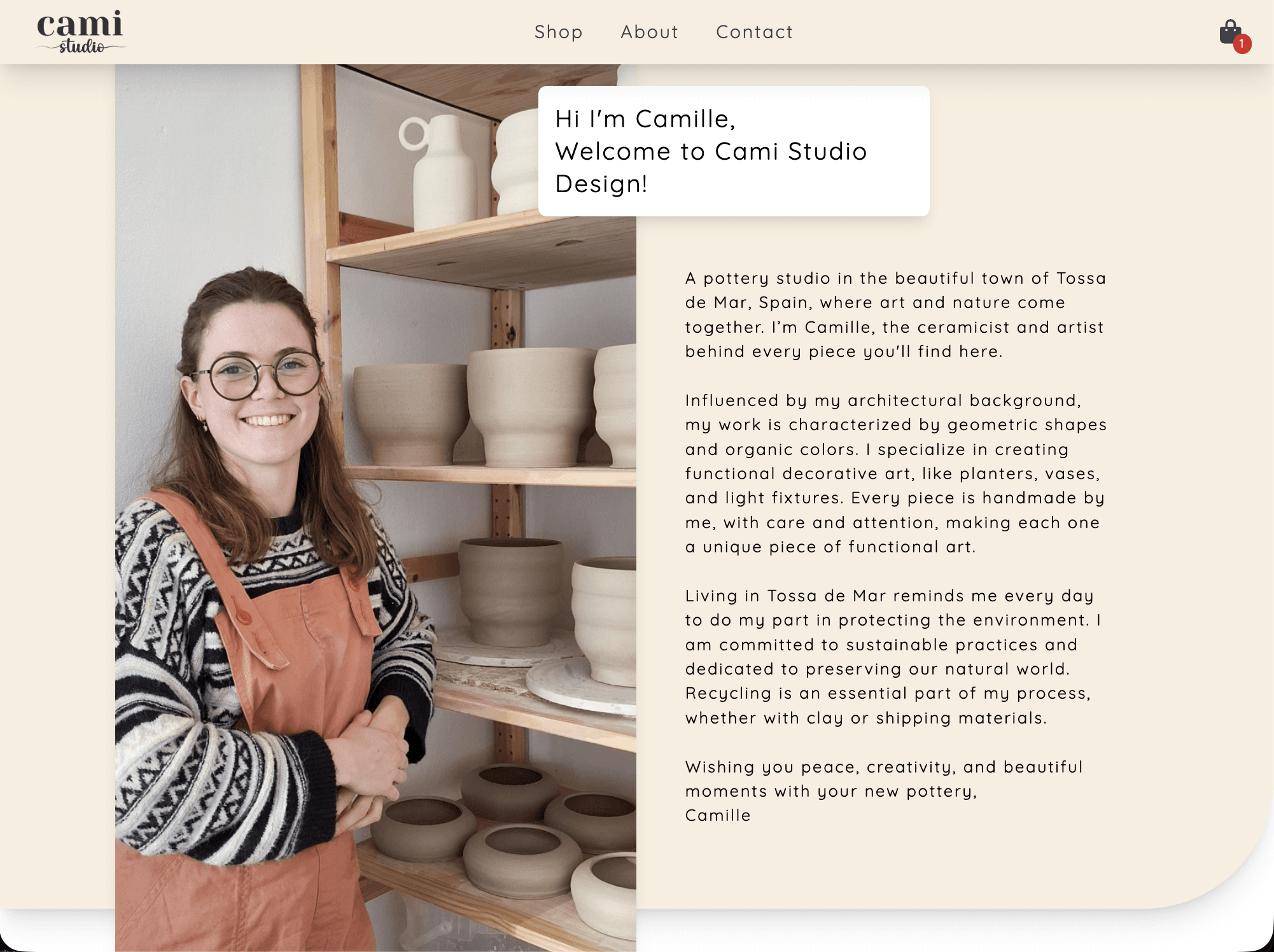
Cami Studio Design is a personal ceramics brand based in Tossa de Mar, focused on handmade, sustainable pieces inspired by nature and architecture.
The goal of the website was to create a digital space that reflects the brand’s identity while supporting online sales and long-term growth.
Key objectives:
Translate a physical craft into a digital experience
Reflect the brand’s calm, natural, and architectural identity
Create a seamless shopping experience
Build trust through storytelling and transparency
Support product discovery and conversion
Research
Cami Studio Website
As both designer and maker, I had a deep understanding of the product and brand values, but I still approached the project with a structured UX mindset.
Analysis of ceramic and lifestyle e-commerce websites
Study of user expectations in small-brand online shops
Identification of key trust elements (materials, process, sustainability)
Mapping user journeys from discovery to purchase
One key insight was that users don’t only buy products — they connect with the story behind them. The website needed to balance commerce and storytelling.
Prototype
Cami Studio Website
I translated the brand and business goals into a clear structure:
Information architecture and product categorization
Navigation focused on simplicity and exploration
Wireframes to define layout and hierarchy
Iteration on product pages to balance aesthetics and usability
The goal was to create a frictionless experience while allowing space for the brand’s narrative.
Visual Guide
Cami Studio Website
The visual direction was directly inspired by the brand itself:
Natural color palette reflecting the environment
Minimal and clean layouts
Strong focus on photography and products
Logo and typography supporting calm and readability
My architectural background influenced the use of grids, spacing, and composition, creating a balance between structure and organic expression.
Final Design
Cami Studio Website
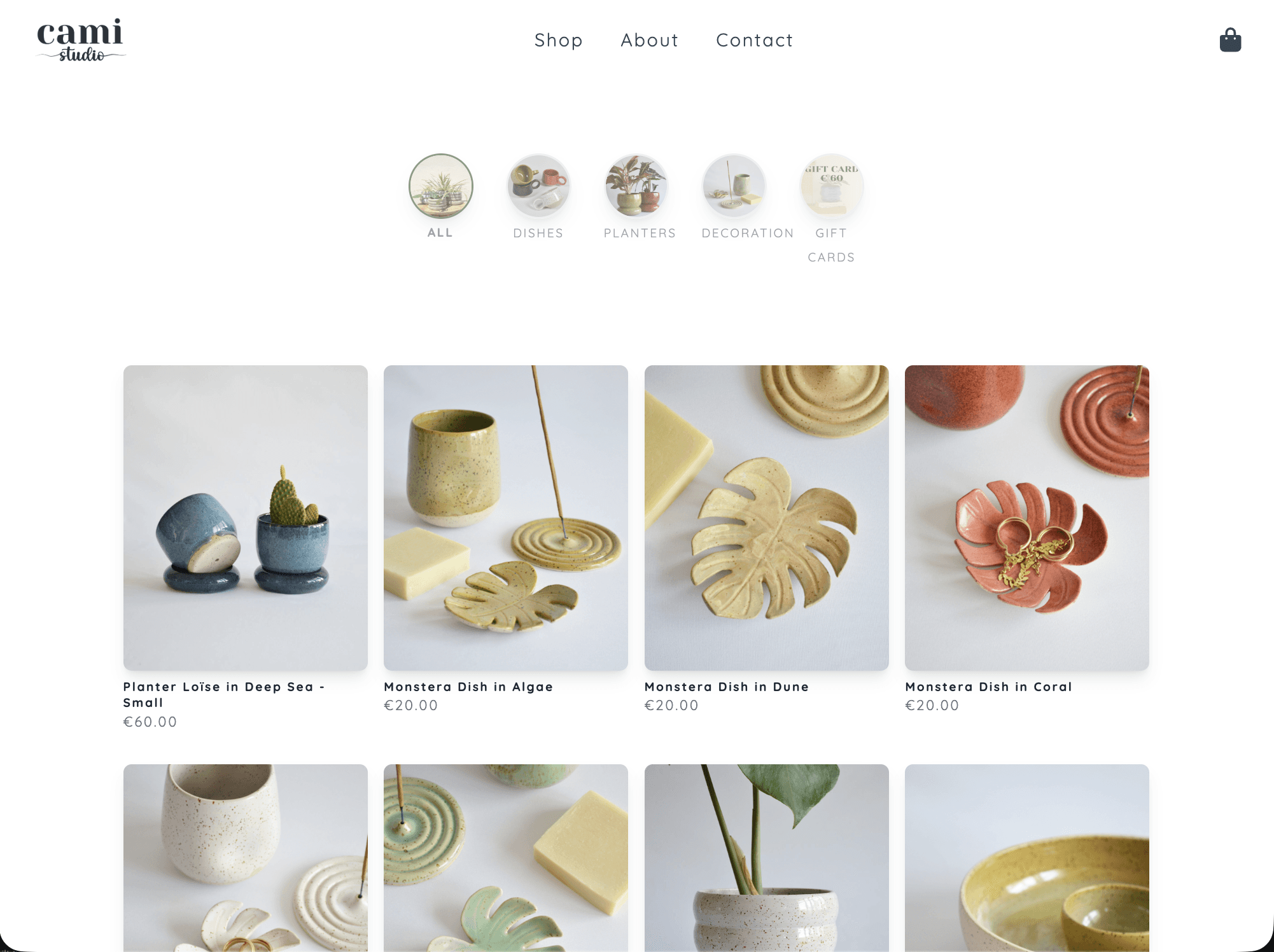
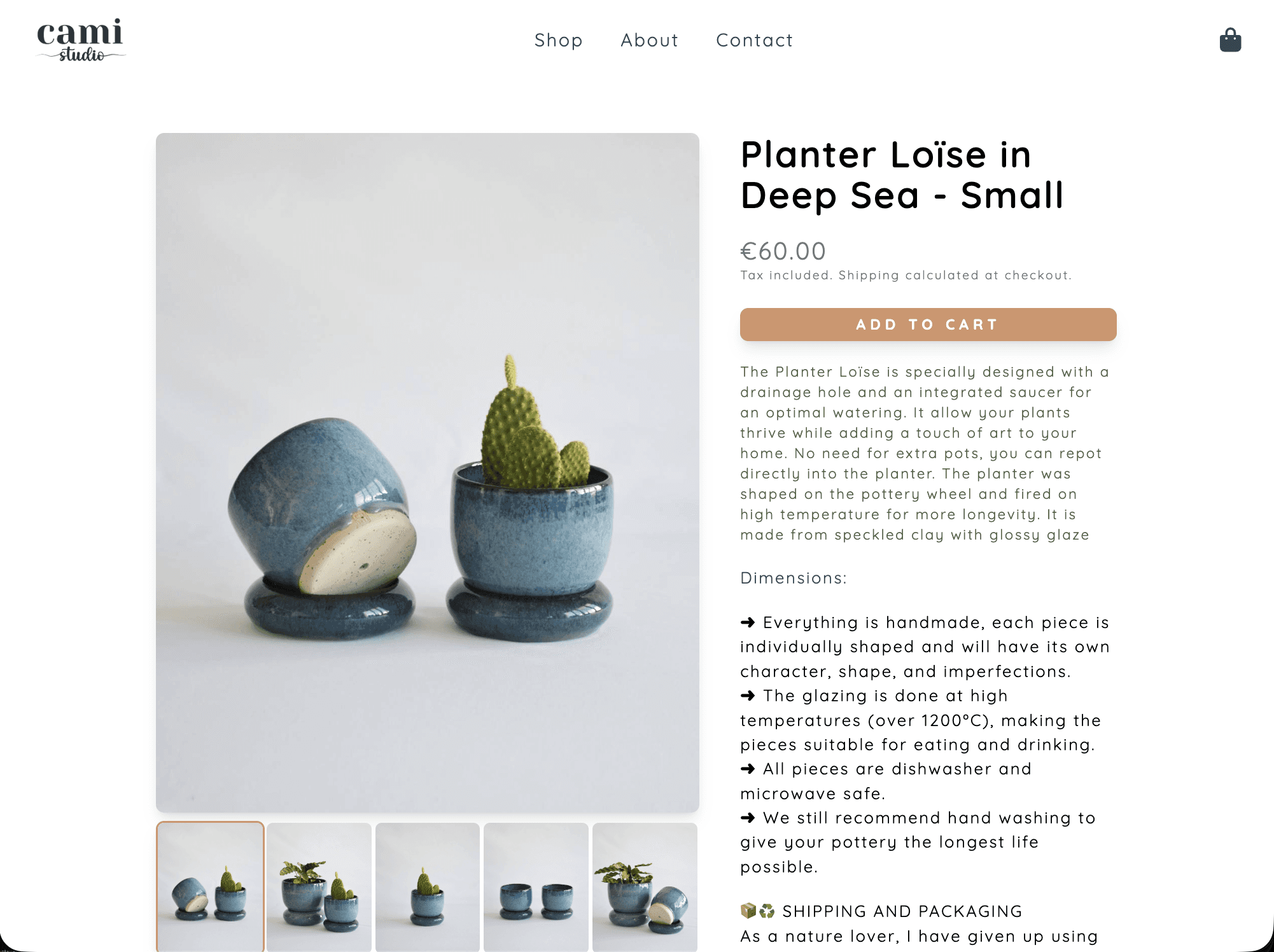
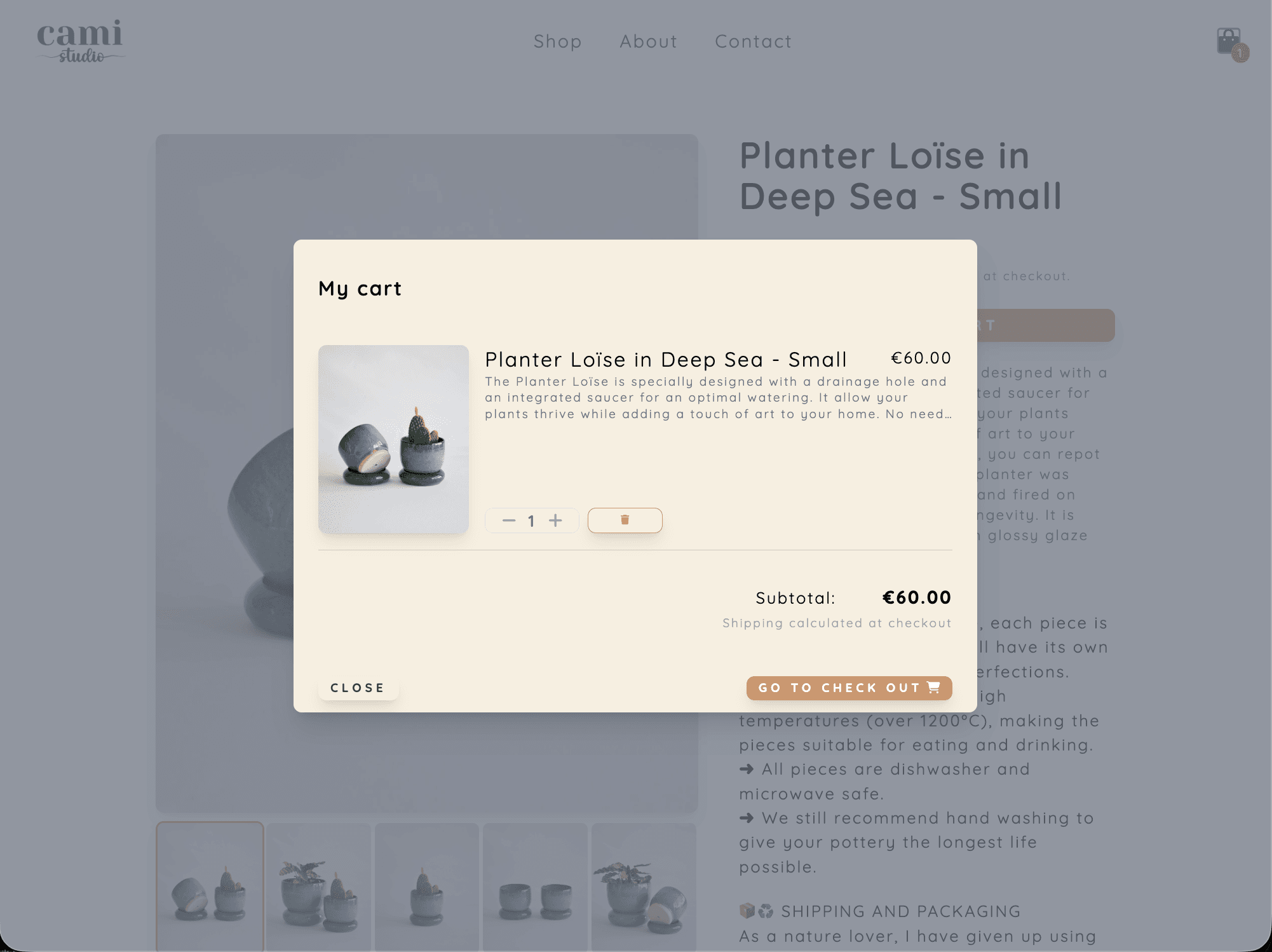
With a fully developed Figma prototype and clear brand guidelines, I led the handover and communication with the development team.
The website was built to support both brand experience and e-commerce performance, combining clear product pages, thoughtful storytelling, and a scalable structure for future collections.
The result is a digital extension of the studio: a space where users can discover, understand, and connect with the work before purchasing.