Datamorf Website
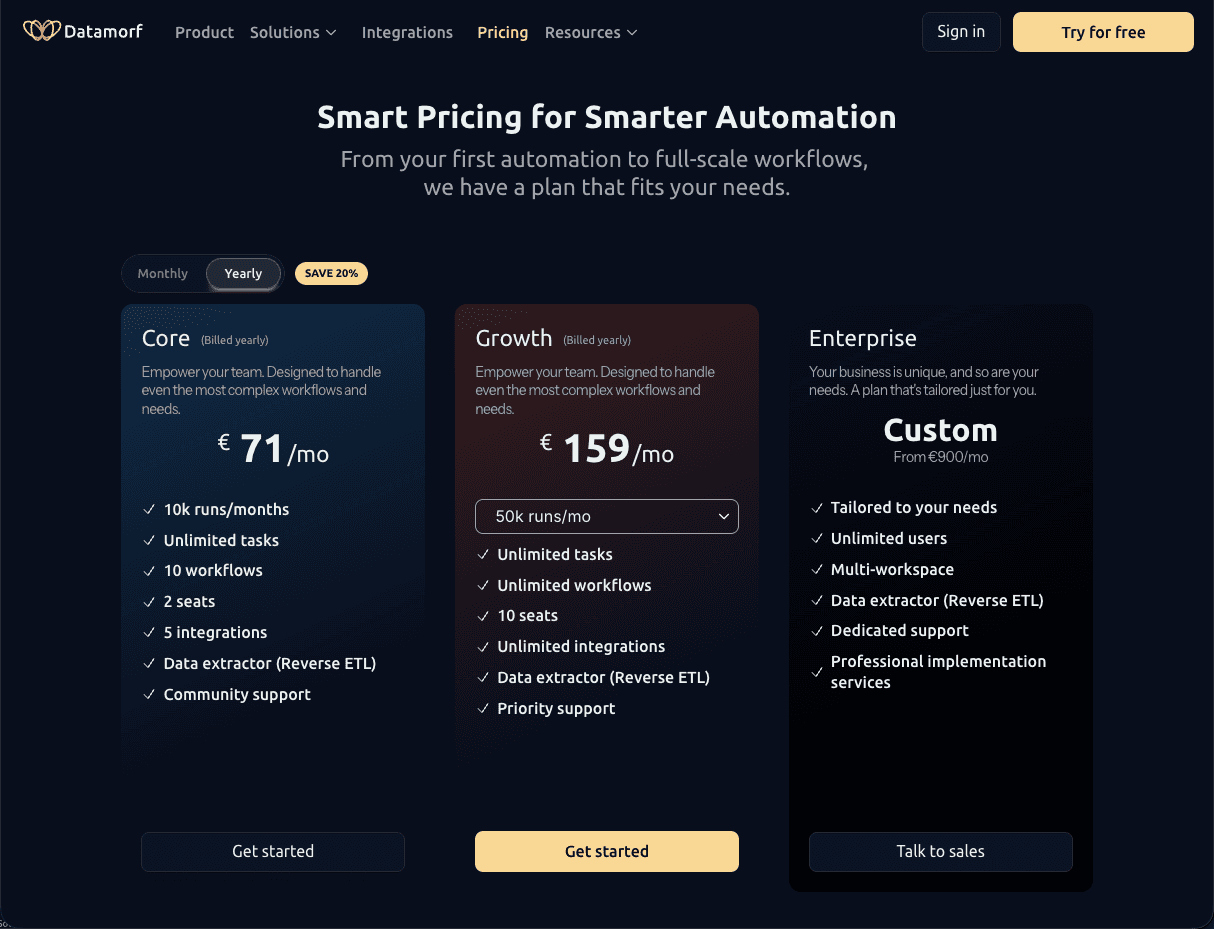
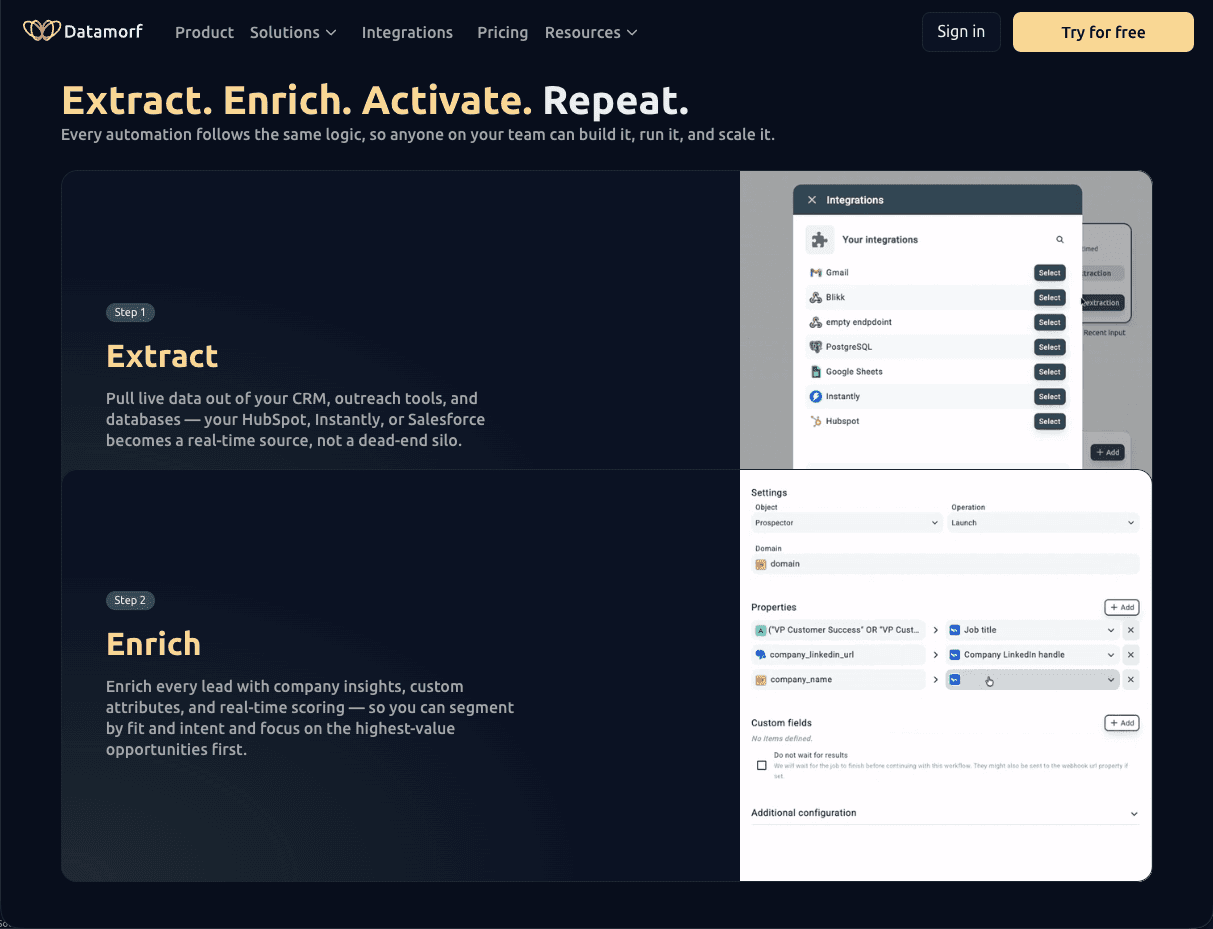
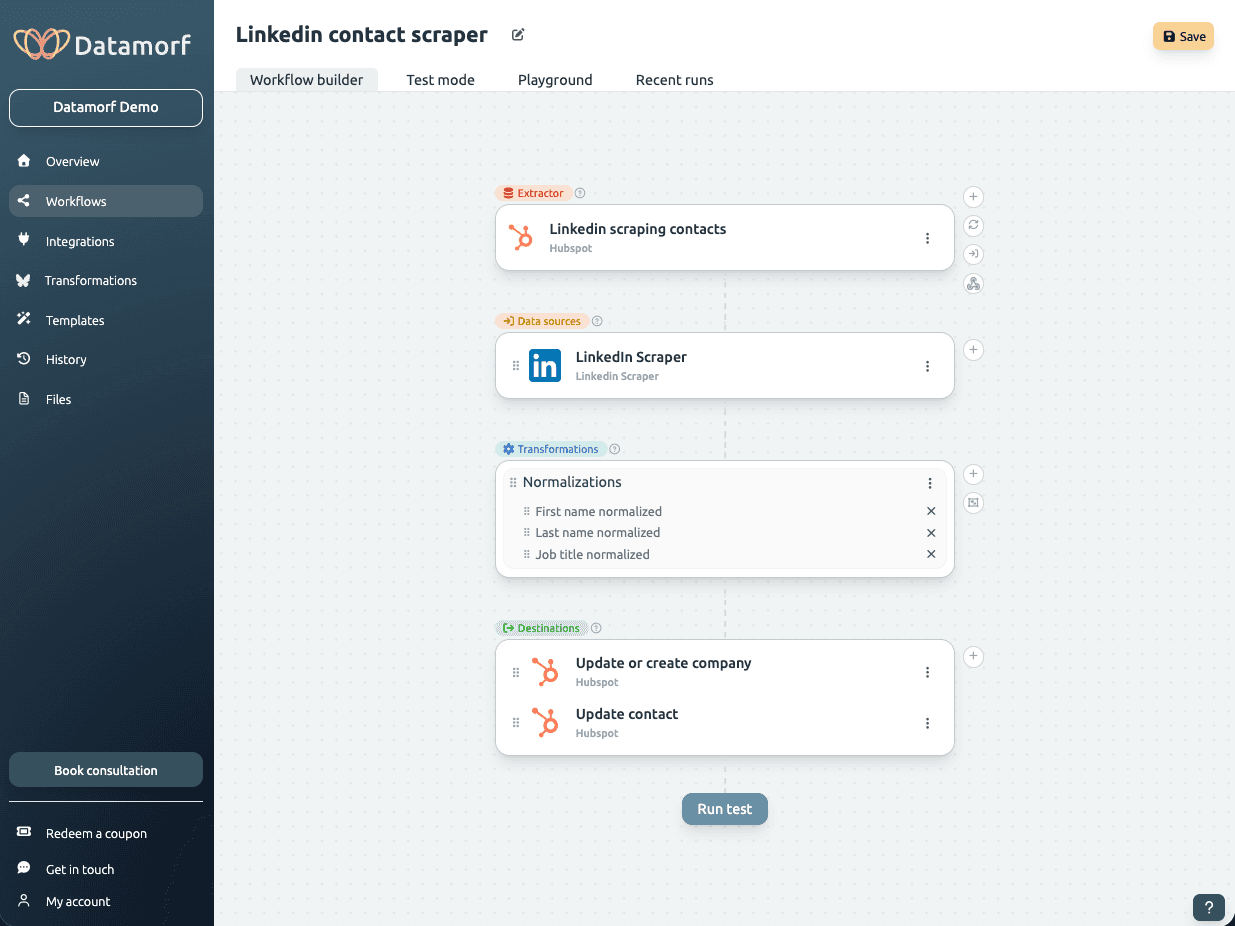
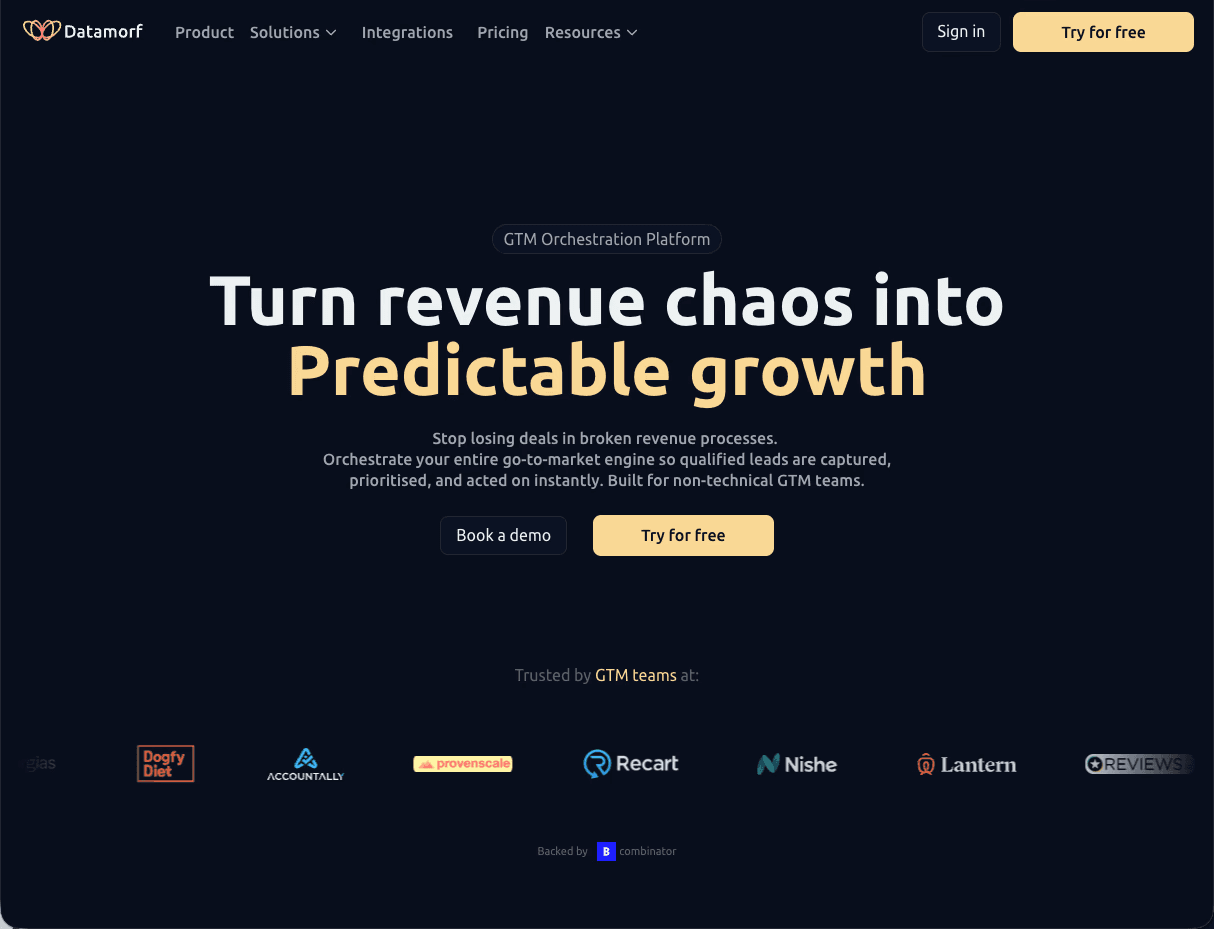
Datamorf is a scaling SaaS platform that needed a high-performing modern website to showcase its product and convert.
Goals & Objectives
Datamorf Website
Datamorf operates in a highly technical, data-driven space. The goal of the website was to clearly communicate the product’s value, build credibility, and support fast growth.
Key objectives:
Simplify complex technical messaging
Clarify product positioning
Structure information for different audiences (technical & decision-makers)
Increase demo requests and early adoption
Build a scalable foundation for future growth
Research
Datamorf Website
Before designing, I focused on understanding the product, the target users, and the competitive landscape.
Datamorf specializes in the automation and orchestration of marketing and sales operations. The market is saturated with automation tools, so it was crucial to clearly communicate Datamorf’s differentiation, quickly and effectively.
Although the product is highly technical, the primary users are marketers, sales teams, and CMOs. A core challenge of the website was translating technical complexity into clear, outcome-driven messaging.
Prototype
Datamorf Website
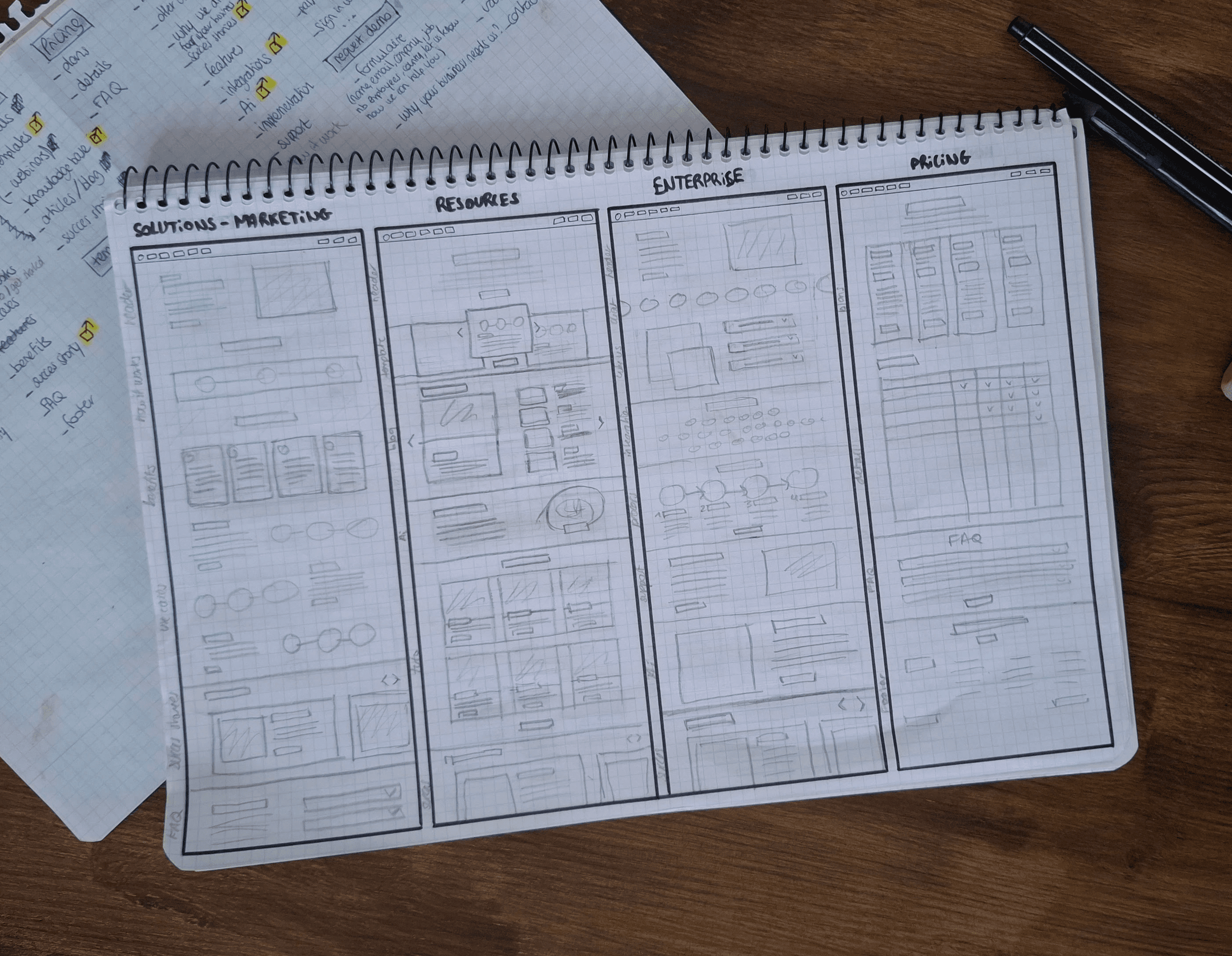
Competitor analysis and user research informed the structural foundation of the site:
Information architecture
Sitemap
User journey mapping
With my architectural background, defining structure is a key part of my UX process, it sets the foundation for all visual and interaction decisions.
Visual Guide
Datamorf Website
With the structure approved, I defined the visual direction.
Brand guidelines were not fully established, so I refined:
Logo
Color palette
Typography
Iconography
Illustrations
From this, I created a consistent UI system directly in Framer, ensuring scalability and visual coherence across the website.
Final Design
Datamorf Website
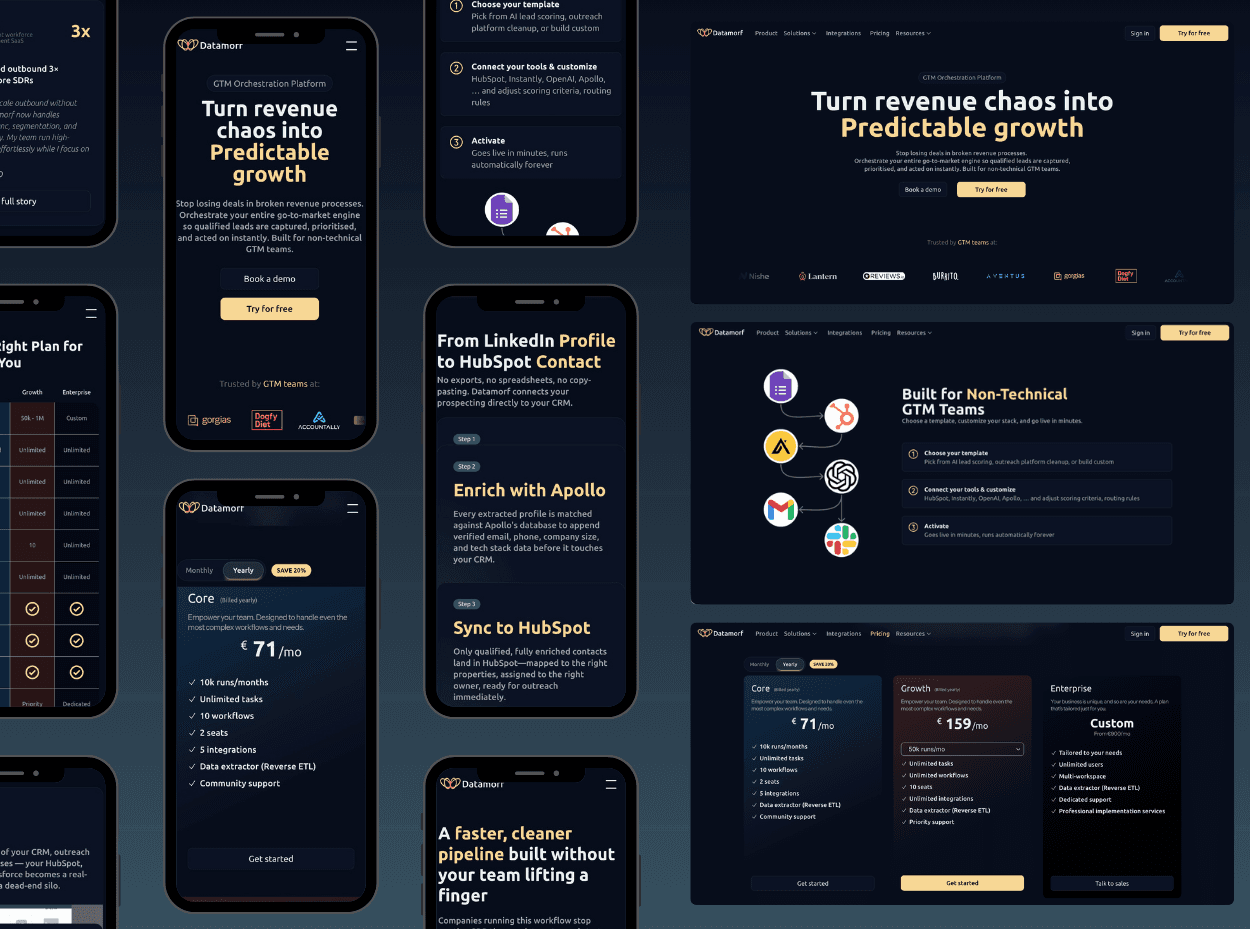
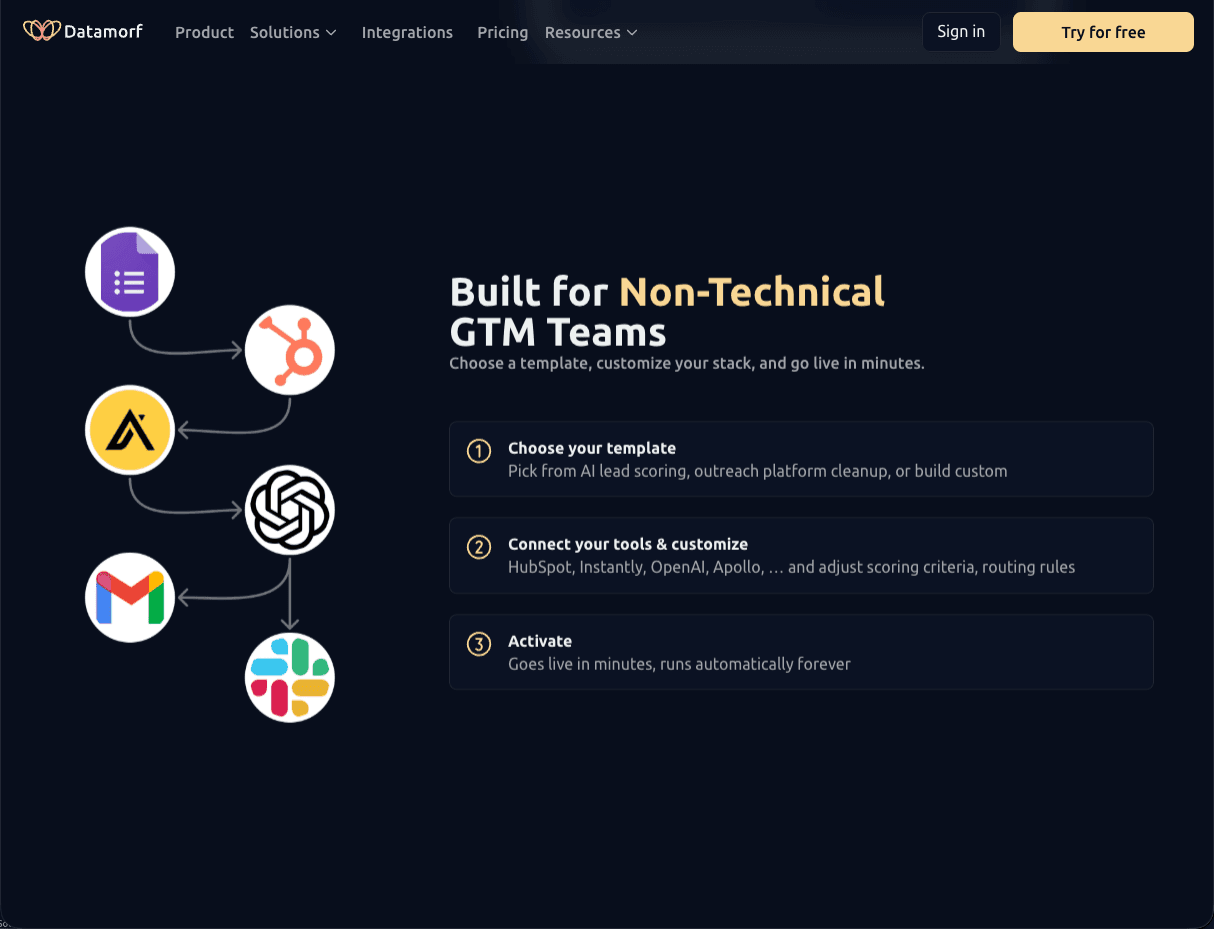
With a validated prototype and defined design system, I built the website in Framer.
The structured preparation enabled an efficient build process, using reusable UI components to maintain consistency, responsiveness, and performance.
Beyond design and development, I implemented a foundational SEO strategy to support growth:
Keyword research aligned with product positioning
SEO-optimized page structure and metadata
Blog setup with content architecture for long-term visibility
LLM-aware content optimization to improve discoverability in AI-driven search environments
Technical SEO best practices within Framer
This ensured the website wasn’t only visually refined, but also positioned to attract and convert organic traffic as the company scales.